
How Long Can My Furnace Last?
Perhaps more years ago than you care to remember, you invested in a new furnace to keep your Baldwin County home warm. You did all the right things: you signed a maintenance agreement, kept up with annual cleaning and inspection, installed a programmable thermostat and followed suggestions on how to ease its workload while still keeping you comfortable. Every now and again, though, you ask yourself that nagging little question, “How long can my furnace last?”
Perhaps your situation is a little different. More years ago than you can remember, you bought a lovely home in the Mobile area, furnace included. You ignored it completely since you weren’t facing the fierce winters of your northern neighbors. Now you continually ask yourself a terrifying little question: “How long can my furnace last?”
The Short Answer
Your furnace will last longer the better you treat it. Whether “longer” is 10 years or 30 years depends on some variables you control and some you can’t.
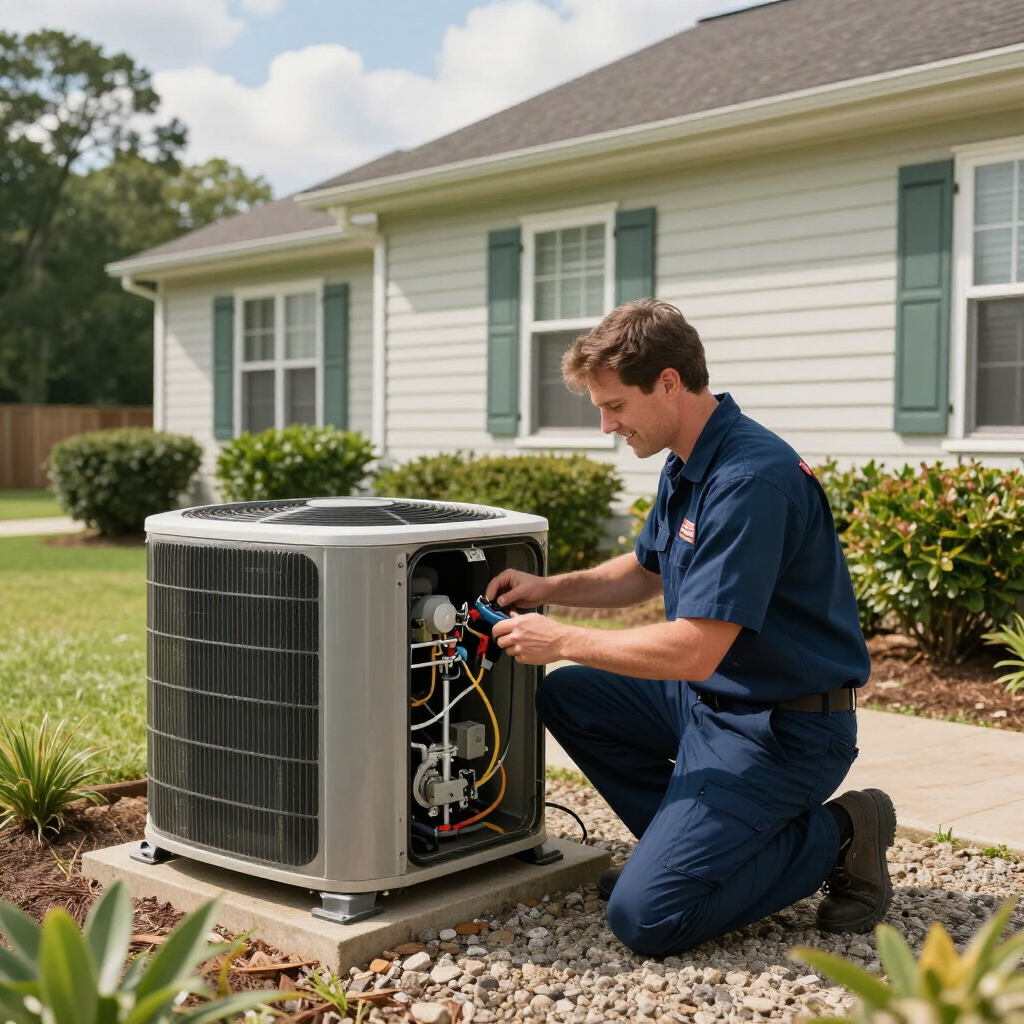
- Annual maintenance can add years to your heating system. A qualified HVAC technician can keep small troubles from getting out of control, while individual parts can be replaced for less money than you’d pay to put in a whole new furnace.
- Making your home as energy efficient as possible also extends the life of your furnace, because calls for heat will be less frequent, air will move easily for recirculation, and you won’t have fluctuations in room temperatures that force your furnace to cycle on and off.
- If your furnace came with your existing home, you can’t know how well it was cared for, and earlier neglect by previous owners is beyond your control.
So when you ask “how long can my furnace last?,” the short answer is 25 to 40 percent longer than average—if you treat it well.
The Longer Answer
Today’s furnaces versus those of 40 or 50 years ago will average between 13 and 20 years of useful life. Furnaces installed decades ago could still be in service today, doing a horrible job providing heat and a great job gobbling up your money. Inefficient furnaces of long ago could convert only around 60 percent of the fuel going into them into usable heat. To make up for that inefficiency while still providing heat, those older furnaces had to be much larger than we need today. A modern furnace can achieve up to 98.5 percent efficiency in much less space and with greater reliability than the old clunkers.
So even if your older furnace is still on the job, it may be costing you a lot in excess energy costs to keep it in service. It’s likely too big, it may have outlived its parts cycle, and it converts fuel to heat at an abysmal efficiency rating. You may want to consider replacing it with one of today’s gas or oil models. Be sure to look for the federal Energy Star certification that tells you the new system is energy efficient and helps to conserve diminishing natural resources.
So while your older furnace may last 13 to 20 years, consider the many benefits of replacing an older furnace with a modern, new one.
The Safe Answer
Perhaps you do have an older furnace and you’ve arranged for qualified HVAC technicians to keep it in good shape. One of the parts they’ll examine every year is the heat exchanger. The heat exchanger is inside your furnace, a place you should not go. It’s the element that takes the fuel’s heat and transfers it to the air or liquid that circulates through your home to keep you warm. If your heat exchanger is cracked or corroded, it shouldn’t be repaired. It’s a strong sign to replace your system.
The other parts you must have inspected are venting connections. Carbon monoxide (CO) gas, formed when any fuel burns, must be vented out of your home safely through chimney connections, which are constantly expanding and contracting through heating cycles. If CO enters your home, this odorless, colorless gas can sicken family members and even lead to death. An older furnace is more likely to have problems with carbon monoxide escaping. If your furnace has repeated problems with CO emissions, consider replacing it.
For expert advice on how long your furnace may last, contact us at Keith Air Conditioning, Inc.